How West Coast Swing Boosts Memory and Focus in Older Adults
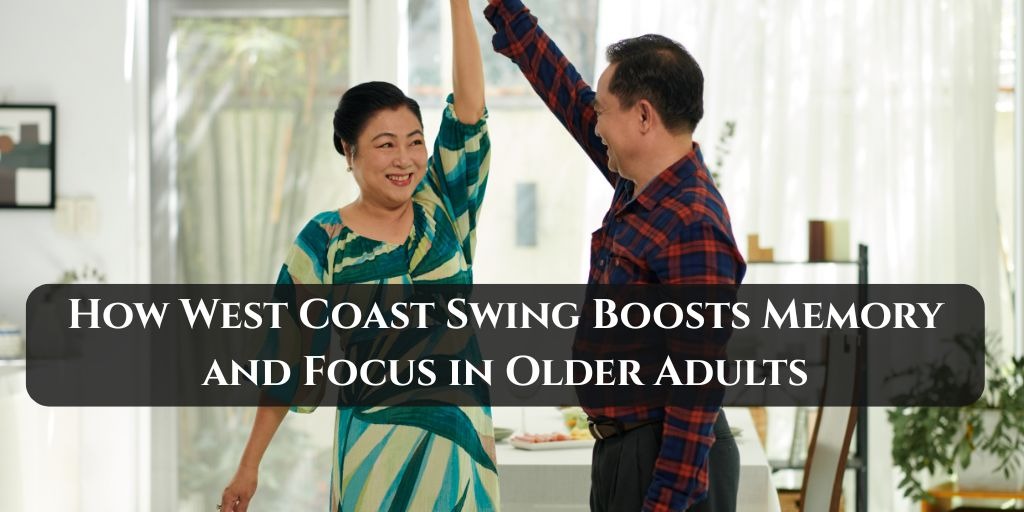
We often hear that dancing keeps you young, but few people realize just how true that is.
Beyond the smiles, music, and movement, dance is quietly emerging as one of the most powerful brain workouts, especially for older adults.
And among all dance styles, one in particular is making waves in Singapore’s active aging community: west coast swing singapore.
It’s smooth, social, and endlessly adaptable, but what truly sets it apart is how it challenges both the body and the mind, helping older adults stay sharp, focused, and joyfully engaged.
The Science Behind Dance and the Brain
Research over the past decade has revealed something remarkable: dancing isn’t just good exercise, it’s cognitive training.
A study published in the New England Journal of Medicine found that older adults who danced regularly had a 76% lower risk of dementia compared to those who didn’t engage in any social dancing.
Unlike walking or swimming, dance combines rhythm, memory, decision-making, and emotional expression all happening at once.
When you dance, your brain forms new neural connections, strengthening areas responsible for coordination, spatial awareness, and memory recall.
In short, you’re training your brain while having fun.
Why West Coast Swing Works Especially Well
So what makes West Coast Swing (WCS) such an effective “brain dance”?
Unlike repetitive routines, WCS thrives on improvisation. It’s a conversation between two partners where one leads and the other follows, constantly interpreting subtle signals and rhythms.
This dynamic interaction activates multiple regions of the brain:
- Prefrontal cortex is for quick decision-making and focus
- Motor cortex for movement coordination
- Limbic system for emotional connection and enjoyment
Every song, every partner, every step is a new challenge, keeping your mind flexible and responsive.
As one seasoned WCS dancer in Singapore put it:
“It’s like chess, but you’re moving to music.”
The Memory Connection: Learning Through Patterns
When older adults learn West Coast Swing, they’re not just memorizing steps; they’re learning patterns and rhythms.
This process trains the working memory, the part of the brain that handles short-term recall and multitasking.
You might start by remembering an 8-count rhythm, then a sequence of turns or syncopations. Over time, this repetition strengthens memory pathways, much like learning a new language or musical instrument.
But unlike mental games, dancing engages the whole body, creating a sensory feedback loop that makes learning stick.
The result?
Better memory retention, faster recall, and improved overall mental clarity even beyond the dance floor.
Focus Through Flow
One of the most underrated benefits of dance is something psychologists call flow state the feeling of being fully immersed in the present moment.
During a West Coast Swing session, older adults must stay focused on rhythm, timing, and connection. There’s no room for multitasking or worrying about yesterday’s chores.
This mental stillness through motion has profound effects:
- Reduces stress and anxiety
- Improves attention span
- Promotes emotional balance
It’s mindfulness without sitting still.
Social Dancing = Cognitive Longevity
Cognitive decline isn’t just about biology; it’s also about social isolation. Loneliness can accelerate memory loss, while social engagement helps preserve it.
West Coast Swing solves both problems at once.
In Singapore’s growing WCS community, older adults find not only movement but belonging. Classes and socials bring people together, encouraging communication, laughter, and mutual learning.
Every dance becomes a friendly conversation through rhythm, timing, and shared joy. That sense of connection releases dopamine and serotonin, boosting mood and motivation, both essential for long-term brain health.
Real Stories, Real Results
Ask any long-time West Coast Swing dancer in Singapore, and you’ll hear similar stories:
- “I feel sharper and more confident.”
- “My memory has improved since I started dancing.”
- “It’s the happiest hour of my week.”
These aren’t coincidences.
They’re the natural results of consistent movement, music, and social engagement, the three pillars of healthy aging.
If you’ve ever wanted to boost your memory, focus, and happiness without another tablet or treadmill, West Coast Swing might just be your answer.
It’s never too late to learn.
And you don’t need rhythm or experience, just curiosity, a smile, and the willingness to move.
